

October 18, 2026

Reflections from the Second CBA Young Bar Day: Building resilience, finding your voice and shaping the profession
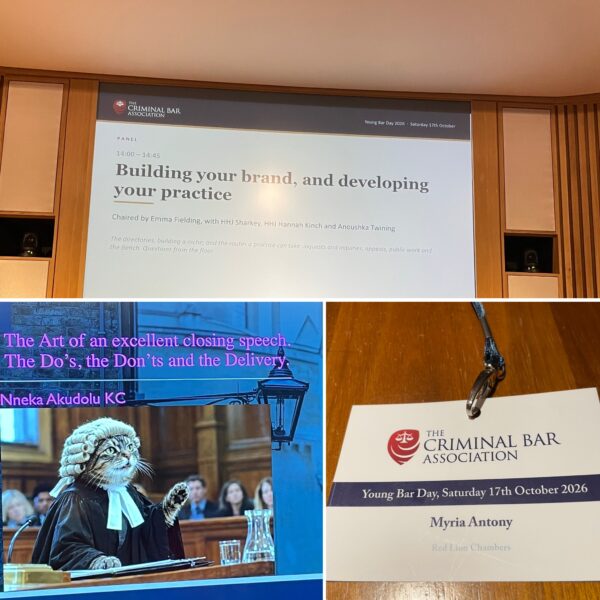
The Young Bar Day brought together members of the judiciary, established practitioners, and the next generation of criminal advocates for a day of practical advice, honest reflection, encouragement and support. Across a programme of candid discussions, interactive workshops and inspiring addresses, the message was clear: “be good at your job, be kind to everyone, and take responsibility for the profession you are helping to shape.”
A profession, not just a job
Opening the day, Andrew Thomas KC, Chair of the Criminal Bar Association, reminded attendees that the Bar was about far more than law, procedure, advocacy or practice development: it was a profession built on a community of people who supported one another. Much of that support was given voluntarily, including within chambers, where practitioners invested their time in helping those at the start of their careers develop.
For the Young Bar, this was a powerful reminder of the privilege of belonging to a profession sustained by the generosity of those who came before us and of our responsibility to preserve that spirit of support for those who will follow.
The best job in the world
The Rt Hon. Dame Anne Rafferty DBE PC, former Lady Justice of Appeal and the first woman to chair the CBA, offered a generous and practical masterclass on building a lasting career at the Bar. Her enthusiasm for criminal practice was infectious. She described it as one of the best jobs in the world, offering endless intellectual challenge and a unique window into people’s lives.
She provided the audience with an 8-point plan. Rather than striving for perfection, she encouraged the Young Bar to focus on doing the job well and being reliable and trustworthy. She emphasised the importance of taking a genuine interest in others, treating everyone with respect, and remaining open to change. Above all, she urged the Young Bar to treat everyone with kindness, at every level.
She reminded attendees that the Bar was a community, sustained by the people within it, and cautioned against becoming consumed by comparison or assumptions about who mattered most. Ultimately, what mattered was the work and the interests of justice. Her closing words captured the spirit of the session: “The art of life lies not in holding the best cards, but in playing the hand you have been dealt.”
Great advocacy is a team effort
Caroline Goodwin KC, Leader of the North Eastern Circuit, turned the focus to advocacy, professional development and the collective strength of the Bar. She encouraged the Young Bar to learn by watching experienced practitioners, never to lose the desire to improve, and to approach every case with meticulous preparation, professional courtesy and adaptability.
Reflecting on her own development and the CBA’s work in responding to challenges facing jury trials, she demonstrated the power of a united profession. By bringing together practitioners from across the Criminal Bar and the circuits, the CBA had built a stronger, more effective collective voice. Her message to the Young Bar was clear: get involved. The future of the Criminal Bar depended on the willingness of the next generation to contribute, speak up and stand together.
Expert witnesses: know your case, not just your questions
Scott Matthewson and Dr Nikki Lack delivered one of the most practical sessions, demonstrating how to work effectively with an expert witness in conference and in court. Through a live case demonstration, they brought to life what to do and what to avoid, showing how seemingly minor factual details could significantly impact expert evidence.
The key takeaway was simple but crucial: an expert’s opinion was only as sound as the factual foundations on which it was based. Effective advocacy therefore demanded more than asking the right questions. It required a thorough grasp of the evidence, careful scrutiny of the expert’s reasoning and the ability to identify where an opinion might unravel.
Building a practice and a professional identity
The panel on building your brand and developing your practice, chaired by Emma Fielding and featuring HHJ Sharkey, HHJ Hannah Kinch, and Anoushka Twining, tackled the challenges of shaping a career at the junior end. The message was clear: do not wait until you feel ready to seize opportunities. Build relationships, seek feedback, make your ambitions known and take ownership of your development. The panel also addressed imposter syndrome, urging the Young Bar not to let self-doubt dictate what they could achieve.
The discussion confronted the realities of a demanding profession, emphasising that resilience meant more than simply pushing through. It meant finding sustainable ways to work, protecting one’s wellbeing and recognising when to seek support. From developing a practice to learning from judges and building professional connections, the advice was practical and empowering: there was no need to have everything figured out from the outset, but it was important to allow oneself the opportunity to grow.
RASSO work: preparation, precision and perspective
Led by Sally Hobson and Henry James, the session on RASSO offered a practical insight into the demands of this area of practice. Using case examples and scenarios that practitioners might encounter, they highlighted the importance of mastering the law, preparing meticulously and understanding the responsibilities the work entailed.
The message was clear: enthusiasm alone was not enough. The Young Bar was encouraged to observe hearings, seek appropriate training and build experience before taking on more complex cases. Equally important was knowing when to ask for help. Seeking advice and identifying trusted sources of support were not signs of weakness, but essential parts of responsible practice.
Advocacy: simplicity is a superpower
Nneka Akudolu KC delivered an interactive session on advocacy that brought the focus back to the courtroom. She offered a masterclass on crafting and delivering an effective closing speech, from the key do’s and don’ts to the finer points of presentation. Her creative, attention-grabbing slides brought the lessons to life, keeping the audience engaged throughout.
At the heart of her advice was preparation, persuasive presentation and finding creative ways to capture and hold a jury’s attention. She emphasised that excellent advocacy was not developed overnight and it was built through observation, feedback, experience and a willingness to learn from others. The goal for the Young Bar was not to be perfect, but to learn, adapt and improve with every opportunity.
A stronger Bar starts with how we treat one another
The closing address from the Rt Hon. Dame Maria Miller DBE, Commissioner for Conduct at the Bar Council, brought the day to a powerful conclusion. She reminded attendees that the rule of law depended on an independent and respected legal profession.
She addressed the issue of bullying, harassment and sexual harassment at the Bar, highlighting the support available to the Young Bar, including Talk to Spot, and the importance of speaking up.
Her message was clear: the Bar’s reputation rested not only on excellence in the courtroom, but on how its members treated one another. Fearless advocacy and professional courtesy were not opposing values. Independence did not require unkindness, and excellence did not excuse bullying.
She underlined the profession’s need for talented, resilient and independent barristers committed to public service and the rule of law. The challenge to the Young Bar was simple, but profound: leave the Bar better than you found it.
The day was a reminder that the Criminal Bar’s greatest strength lay not only in the quality of its individual advocates, but in its collective ability to learn, adapt, support one another and defend the values that make the profession worth joining.
And, as the Rt Hon. Dame Anne Rafferty reminded us, one principle mattered above all: be kind to everyone.
Written by Myria Antony (Pupil Barrister)