

September 18, 2026
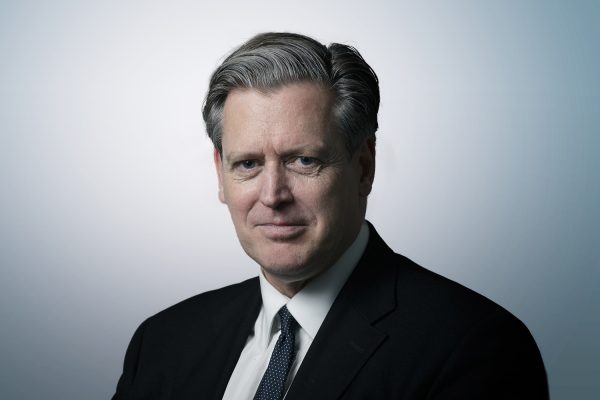
In an interview with ‘City Solicitor’ magazine, David Walbank KC has expressed trenchant criticism of the proposed restrictions on the right to jury trial in major fraud prosecutions.
The interviewer began with an acknowledgement of David’s vast experience in the trial of serious fraud:
“David’s authority on the subject is hard won. His route to the criminal Bar was not straightforward. He began, as many do, in the civil courts … Then came a chance opportunity. A criminal case, offered almost by accident. He accepted it with little expectation. What followed was, by his own telling, immediate clarity. ‘This is what I thought the Bar was going to be,’ he recalls. Within hours of that first day in court, his practice had transformed. Instructions flooded in. A criminal career took shape almost overnight. For the next two decades, David built a formidable reputation as a fraud specialist, primarily on the prosecution side. He served as Standing Counsel to the Revenue and Customs Prosecutions Office (RCPO) and to the Department for Business, Innovation and Skills, acting in complex and often high stakes financial cases. Fifteen years ago, he changed sides, moving into defence work. The shift gave him something few practitioners can claim in equal measure. A panoramic view of the system from both perspectives. Prosecution and defence. State and individual. Power and vulnerability. It is from that vantage point that he now speaks with such force.”
The interviewer then referred to David’s repugnance at the notion that such life-changing consequences should be decided by a single judge rather than a jury:
“At the heart of his objection to the proposed reforms is a simple but profound concern. Fraud cases, he argues, are not peripheral. They are among the most serious cases heard in the criminal courts, carrying consequences that can amount, in practical terms, to the end of a person’s life. Sentences for serious fraud have increased dramatically in recent years. Double digit custodial terms are no longer unusual. But it does not end there. Alongside imprisonment comes the machinery of confiscation proceedings, a system David describes as draconian. These proceedings operate on assumptions that place a heavy burden on defendants. They must prove that their available assets are less than the benefit said to have been derived from the offence. If they fail to do so, the court can impose orders for the full amount. Payment windows are often short. Failure to comply leads to further imprisonment, consecutive to the original sentence. The cumulative effect is stark. ‘For many defendants,’ David says, ‘it is not far off a death sentence in any meaningful sense.’ It is a deliberately unsettling formulation. And it leads directly to what he considers the central injustice of the proposed reforms. That such life defining consequences could be determined not by a jury of peers, but by a single judge. ‘I think people ought to be absolutely revolted by that,’ he says. The word is carefully chosen. Revolted. Not concerned. Not uneasy. Outraged.”
The interviewer then asked David for his views about the capacity of juries to comprehend the most complex fraud cases:
“One of the most persistent justifications for removing juries in complex fraud cases is that they are simply too difficult for lay people to understand. David dismisses this entirely. ‘I have never, ever, ever seen a jury that did not understand the case.’ It is a statement born of experience rather than theory. Thirty five years of jury trials. Cases lasting months. Mountains of evidence. Technical detail. Financial structures. Regulatory frameworks. And yet, he insists, juries understand.” And, moreover, “They take their role seriously. They understand the gravity of what is being asked of them. Over time, the process becomes not just a duty, but a shared endeavour. David speaks of this with something close to admiration. ‘I have enormous faith in juries’, he says. ‘I would take a jury one hundred times out of one hundred over a single judge.”
Finally, the interview finished with a broadside against a political class that is willing to entertain the abolition of jury trial in such cases:
“To remove juries from fraud cases is not a procedural adjustment. It is a structural shift. One that alters the balance between state and individual in a profound way. David’s concern extends beyond the courtroom to the political context in which these proposals have emerged. He is visibly troubled by the fact that such reforms are being advanced by government led by individuals with backgrounds in human rights law. He stopped short of outright condemnation, but the implication is clear. There is, he suggests, a dissonance between the principles those roles are meant to embody and the policy now being pursued. More broadly, he is critical of the parliamentary process surrounding the legislation. He questions whether an issue of such constitutional significance should be subject to party whipping at all. In his view, it calls for individual judgement. A conscience vote. The spectacle of MPs supporting the measure along party lines, or abstaining rather than opposing it outright, strikes him as deeply troubling. ‘It is shameful,’ he says. Strong words. But then, strong words are the point … What David is articulating is not merely a legal objection. It is a call to recover a sense of proportion. To recognise when something warrants more than polite disagreement … And if the response remains polite, one is left to wonder what, if anything, would provoke the outrage he believes is so urgently required.”
You can read the full interview with David Walbank KC here: https://issuu.com/benham/docs/city_solicitor_june_2026/11
The interview was commissioned by Naureen Shariff, who is a Partner at Blackfords LLP, sits on the editorial board of ‘City Solicitor’ magazine and is a Liveryman and Full Assistant of the City of London Solicitors’ Company.
Barristers

David Walbank KC
Call: 1987 | Silk: 2018